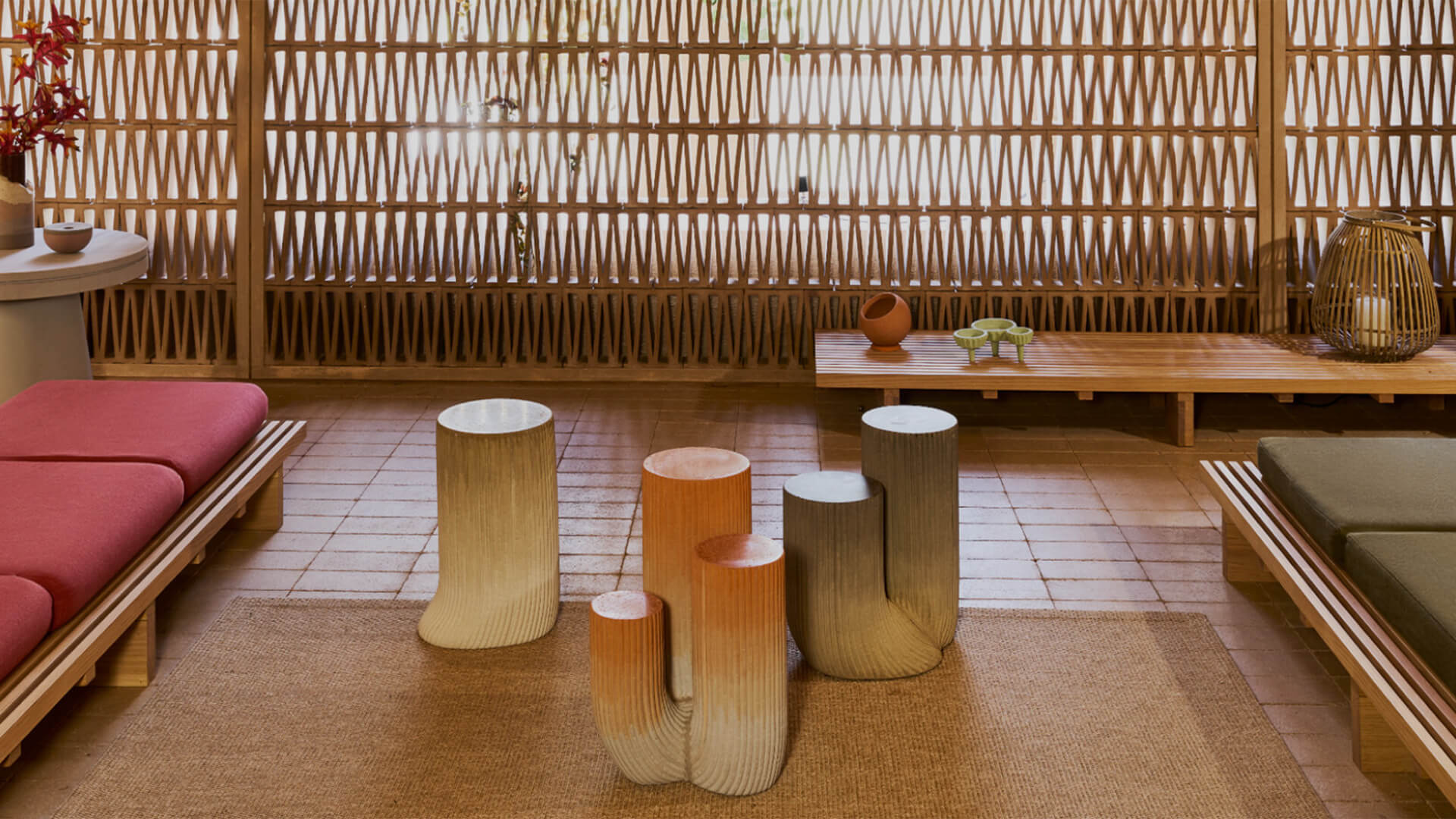
Concrete as an alternative material for design objects
Far from facing concrete as a rigid industrial medium, the Athens-based studio URBI et ORBI explores the boundaries of the material’s organic nature through creative research and experimentation. By combining raw, earth-born components – ground rock, sand, and water – with specialized techniques like color-shaded stratification and unexpected material juxtapositions, the resulting objects introduce a warm, tactile plasticity to both domestic and hospitality spaces.
All images courtesy of URBI et ORBI.
URBI et ORBI rethinks concrete through creative experimentation
Founded in 2012, URBI et ORBI’s collections emerge from a close collaboration between artisans and designers, who use raw materials through the lens of Mediterranean culture, rich in local memories and human craftsmanship. The company’s entire workflow is guided by a strong environmental commitment, in which the concrete combination is crafted to endure yet designed to assimilate back into nature at the end of its lifecycle.
This circular approach materializes in URBI et ORBI’s Zero Waste Project. Launched in 2020, the initiative intercepts 100% of internal industrial waste directly from the workshop floor. Heavy concrete rubble is crushed to replace traditional gravel and aggregates, while high-capacity dust collectors capture the airborne residues left behind from sawing and grinding to serve as fine fillers in new material mixes. Through this mechanical loop, the final objects incorporate between 20% and 80% recycled components, yielding an unpredictable, contemporary texture.
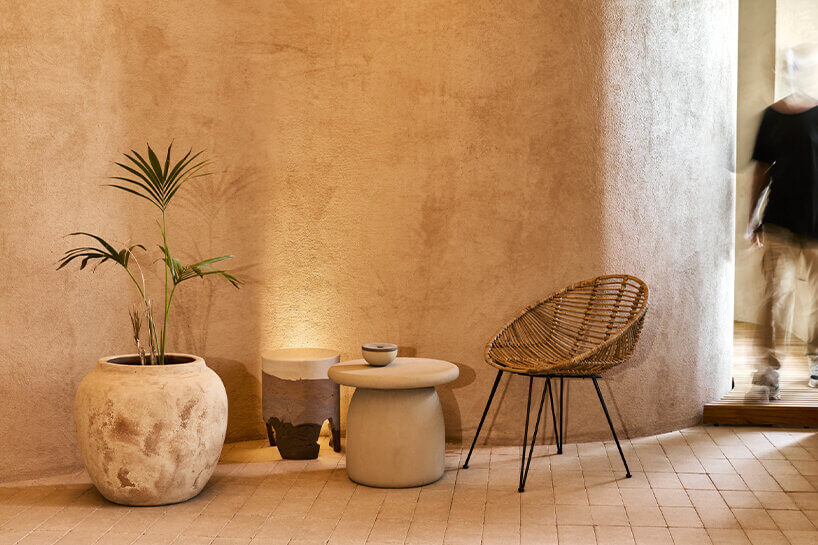
and ULTIMA concrete ashtray by Valentino Marengo.
Design objects with a circular approach
Many of the studio’s most distinctive objects embody this experimental, closed-loop approach. The Saroma side table by Greek designer Sotiris Lazou physically captures the rhythmic, everyday gesture of sweeping (σάρωμα). In an unconventional material pairing, the piece embeds actual fibers from traditional straw brooms directly into the textured concrete surface.
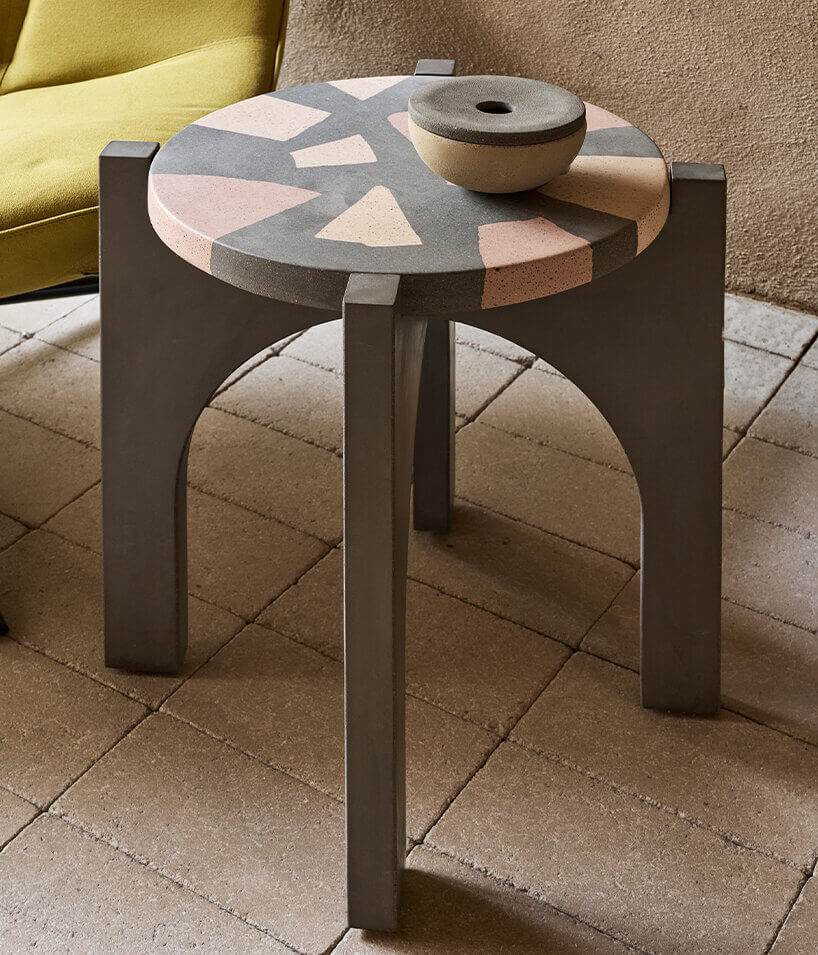
The cultural stratification of materials continues in the Legante table series by CTRLZAK Studio. Here, the designers collect mineral scraps and broken fragments from local marble and ceramic workshops, casting them into the fluid concrete matrix to form a raw, upcycled interpretation of classic terrazzo. Exploring Mediterranean architectural forms, Italian designer Sara Ricciardi’s Oikos side table references archetypal silhouettes. Rendered in sun-bleached earth tones, the piece utilizes zero-waste processes to form integrated terrazzo accents, translating historic forms into contemporary, circular monoliths.
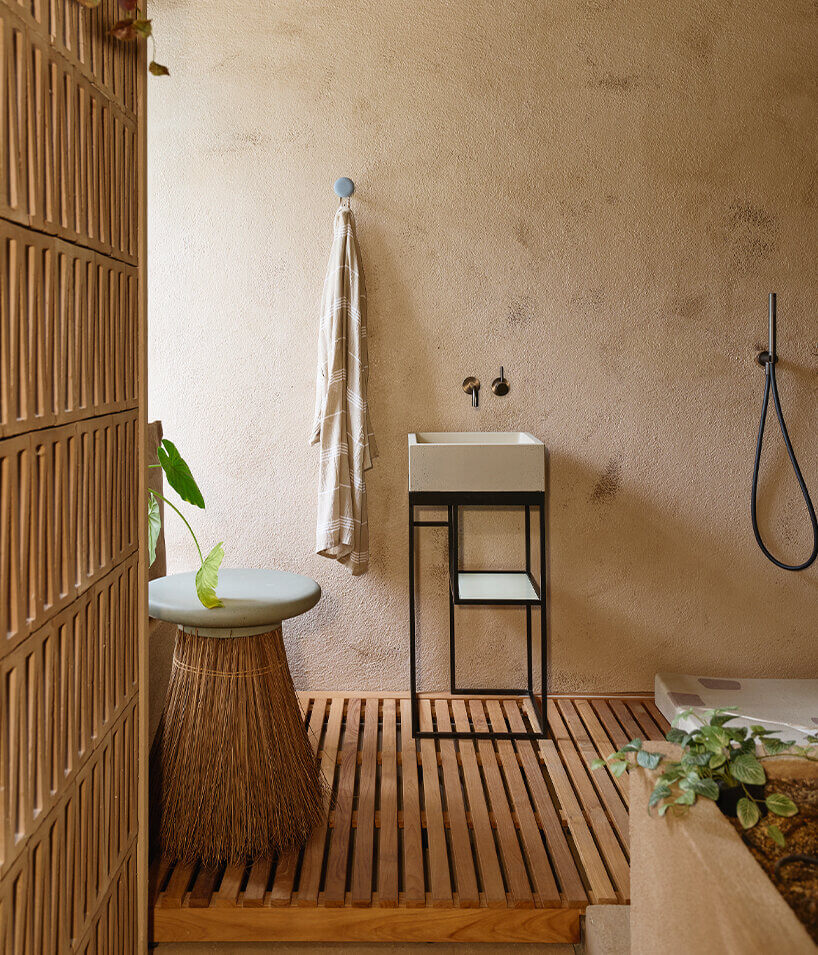
& EROSION shower tray by CTRLZAK design studio, PROKA cement wall hook-hanger by Urbi et Orbi studio.
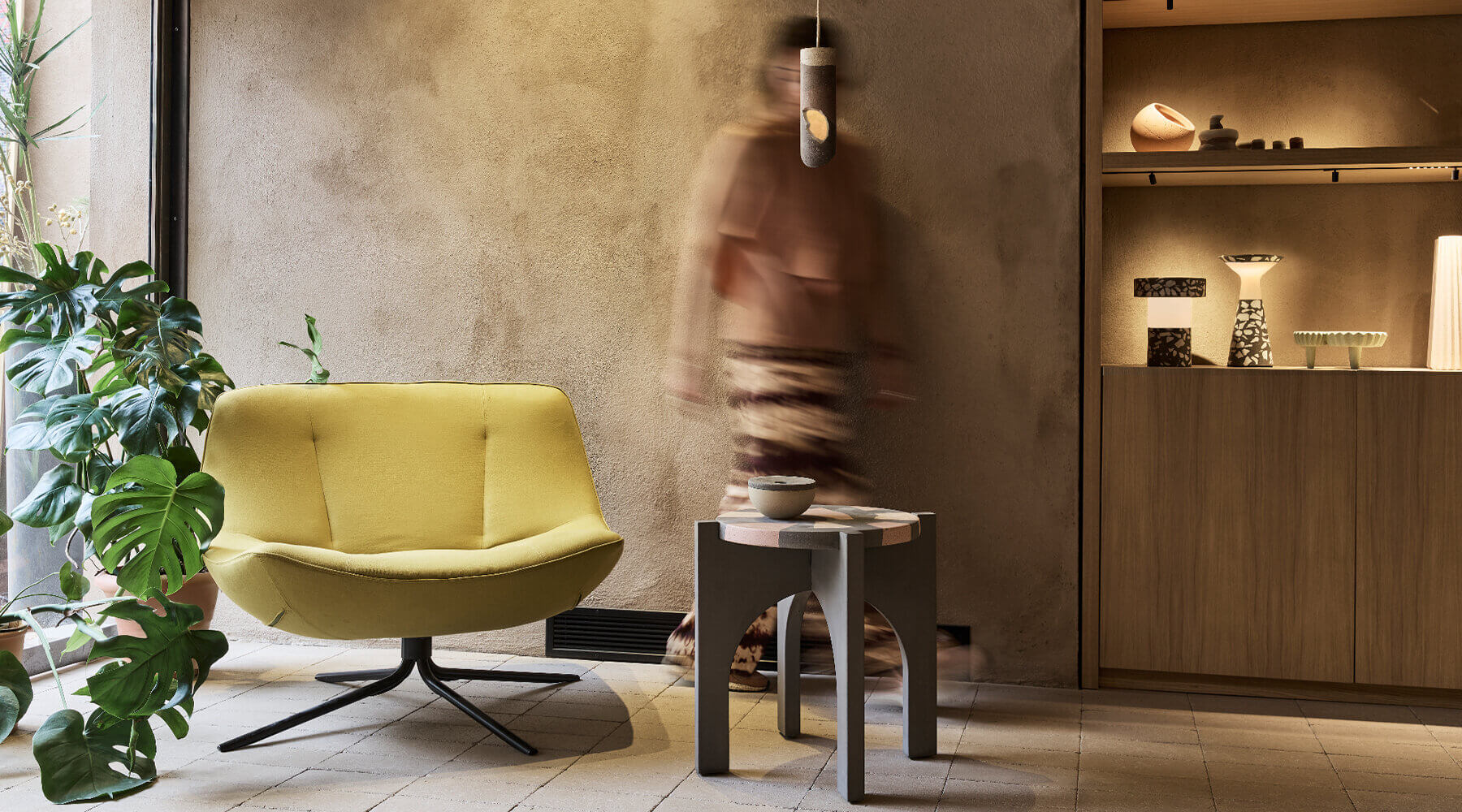
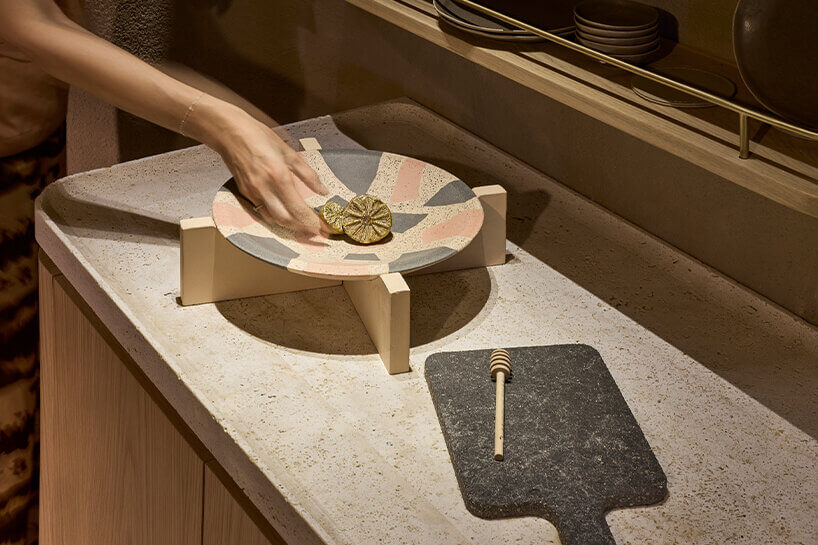
SIMAN catchall concrete tray by Gian Paolo Venier and LUCERA wireless table lamps from cast concrete and semi-transparent resin by Sotiris Lazou Design Studio.
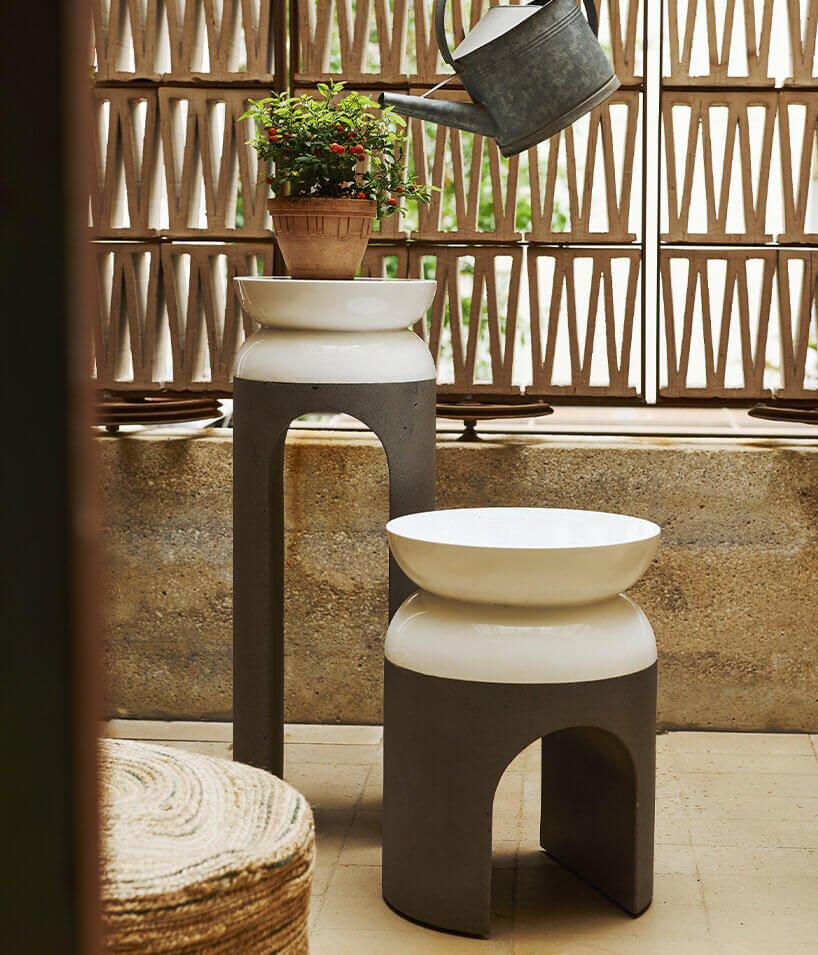
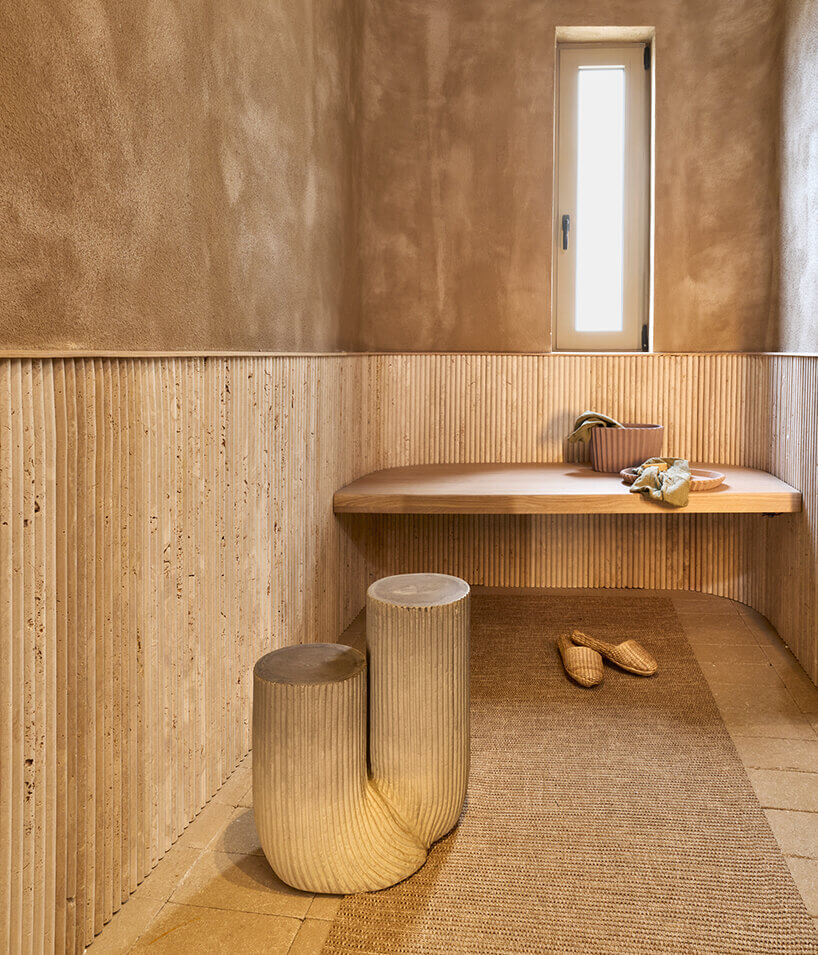
By combining raw, earth-born components – ground rock, sand, and water – with specialized techniques like color-shaded stratification and unexpected material juxtapositions, the resulting objects introduce a warm, tactile plasticity to both domestic and hospitality spaces.
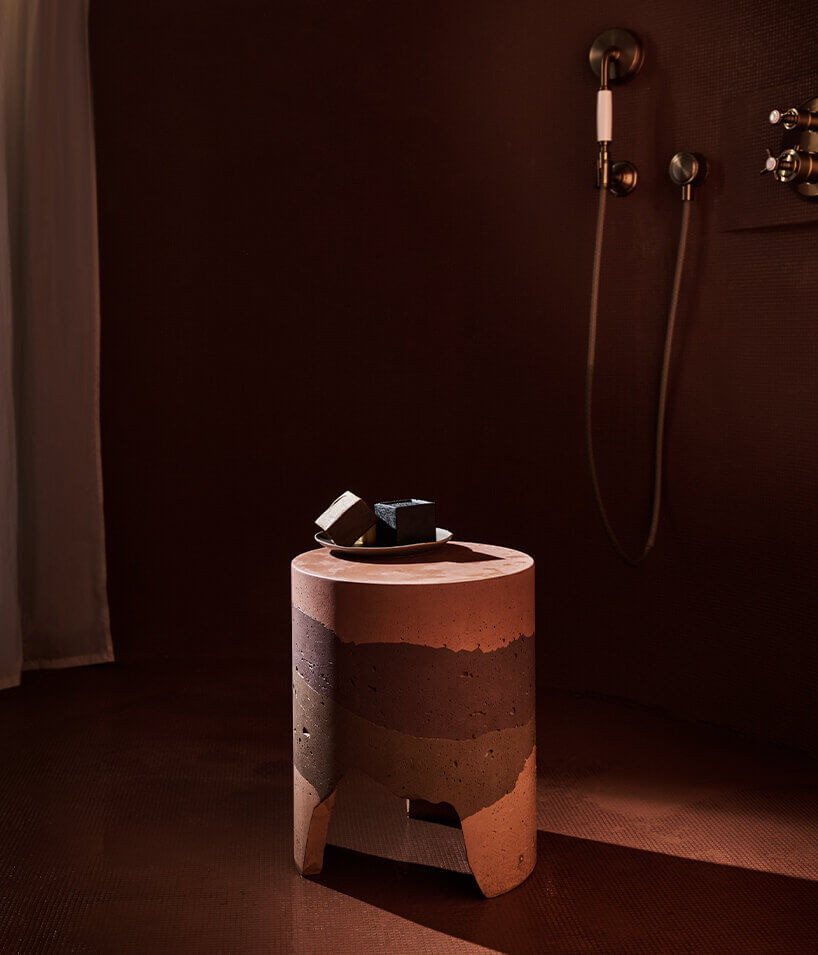
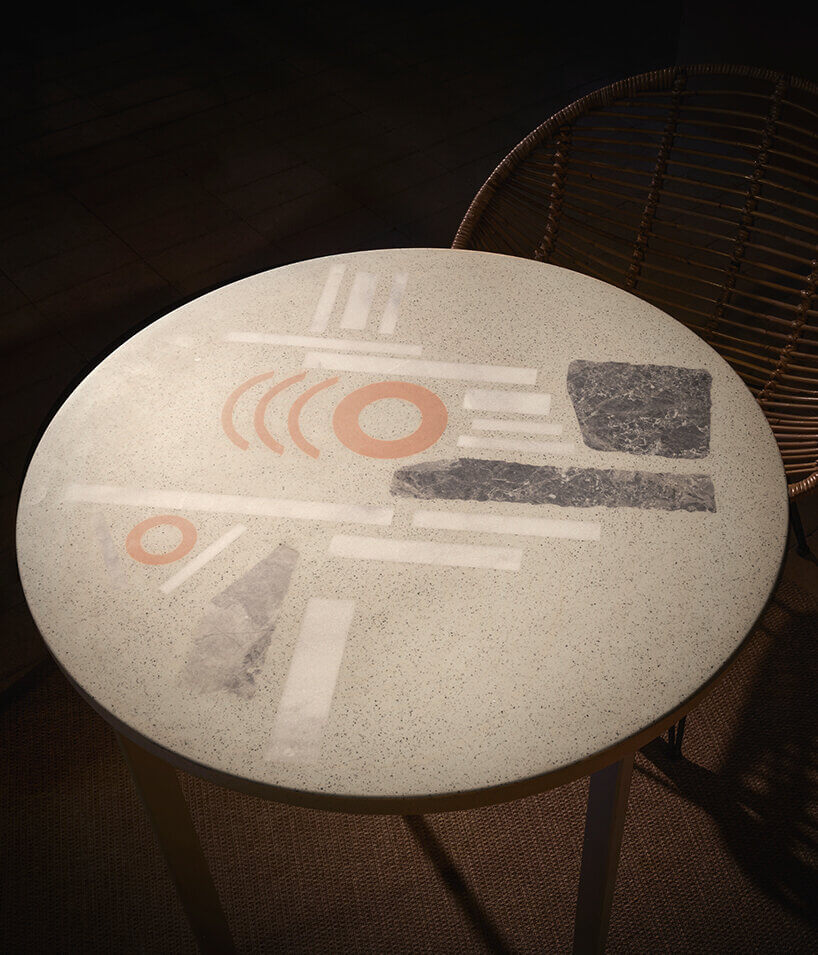
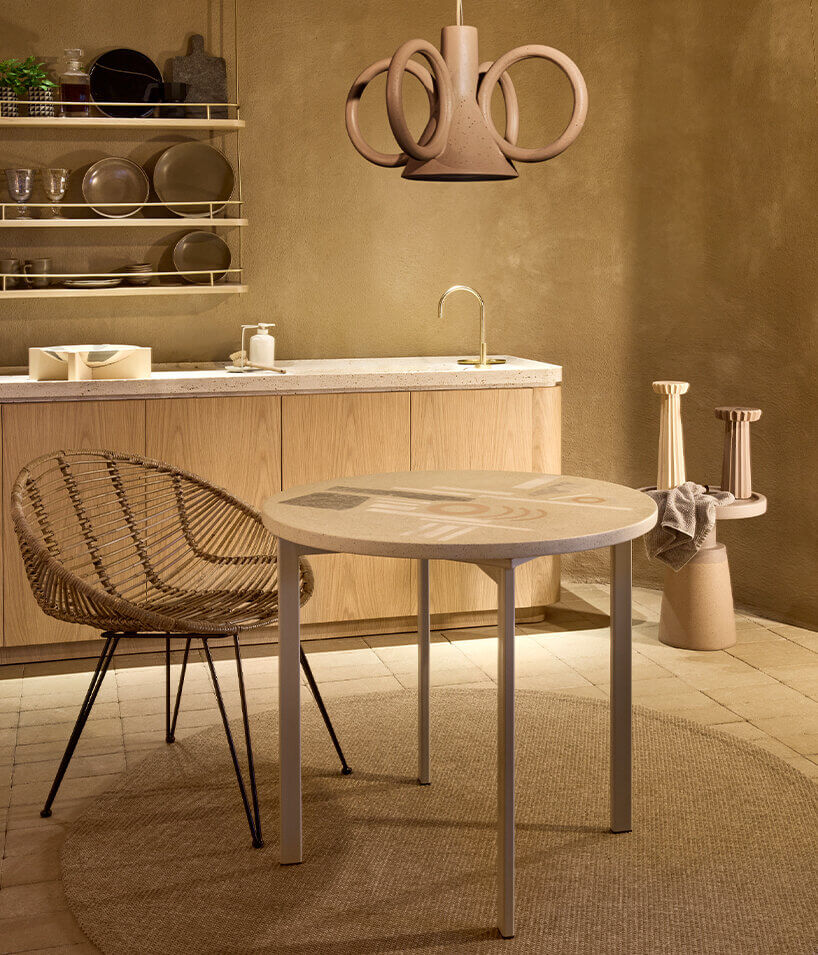
and SIMAN concrete candle holder by Gian Paolo Venier, Otto studio.
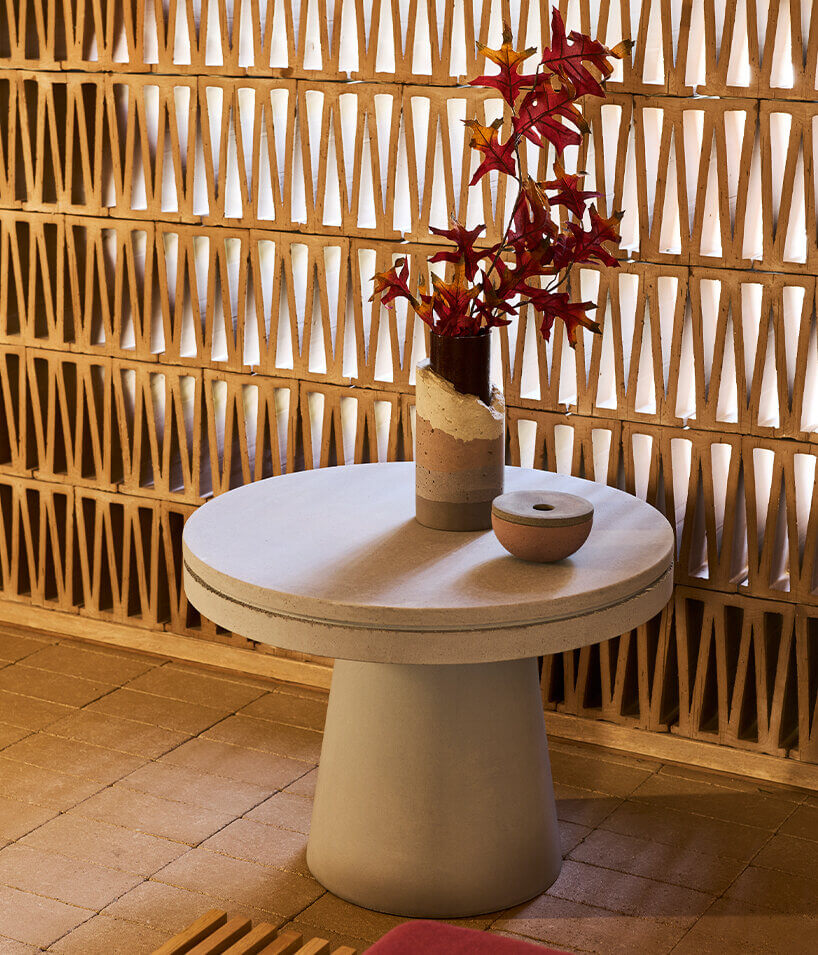
and DJEMBE concrete coffee/side table by Urbi et Orbi Studio.
Project info:
Company: URBI et ORBI
SOURCE: DESIGNBOOM
Editing: Mariana Rodrigues | designboom
Translation supervision: Interiors pick Team